- Unlimited travel on Japan Railway trains, buses and ferries
- No need to book trains in advance
- Cost efficient for itineraries with more than 3 steps a week
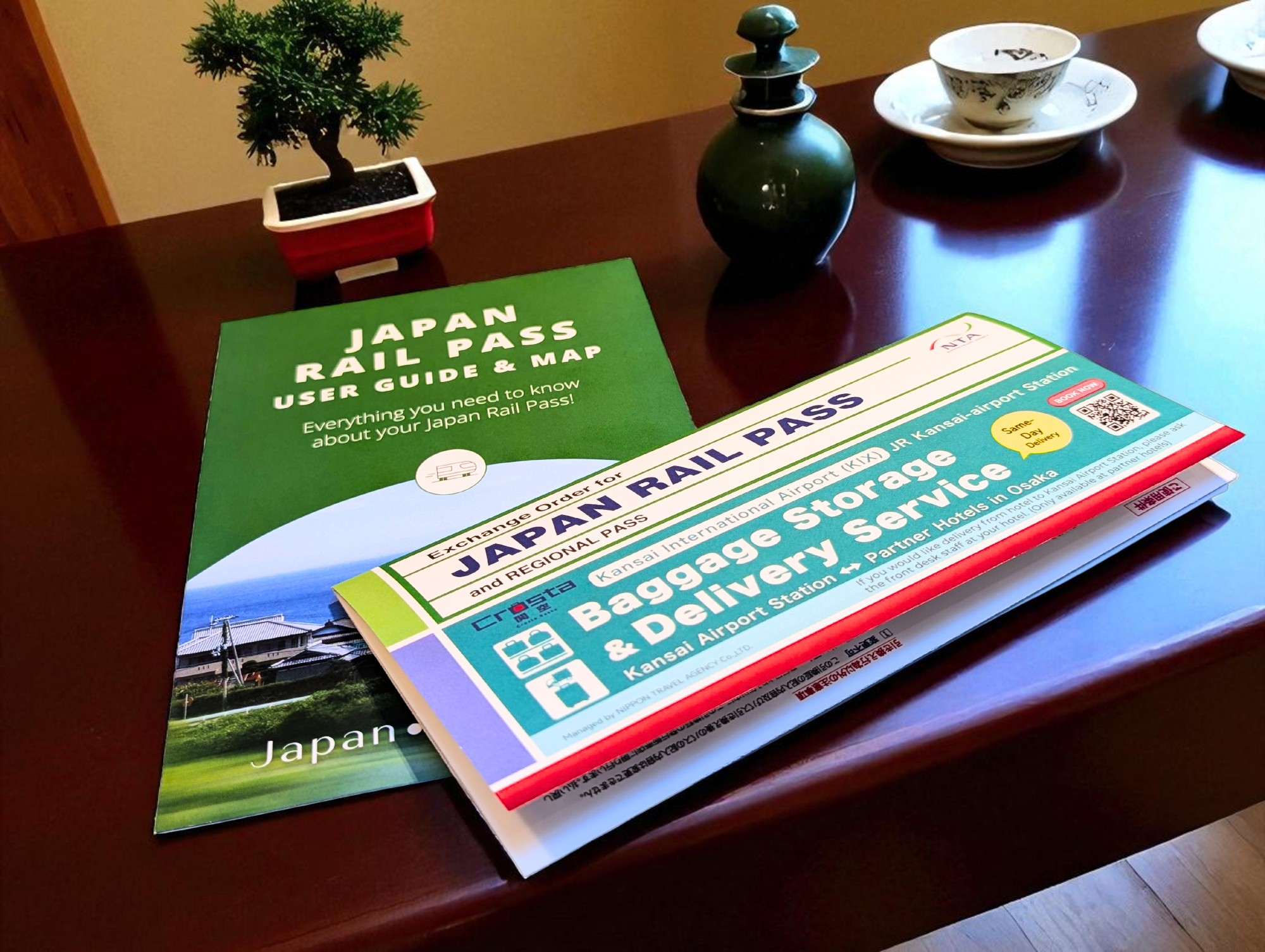
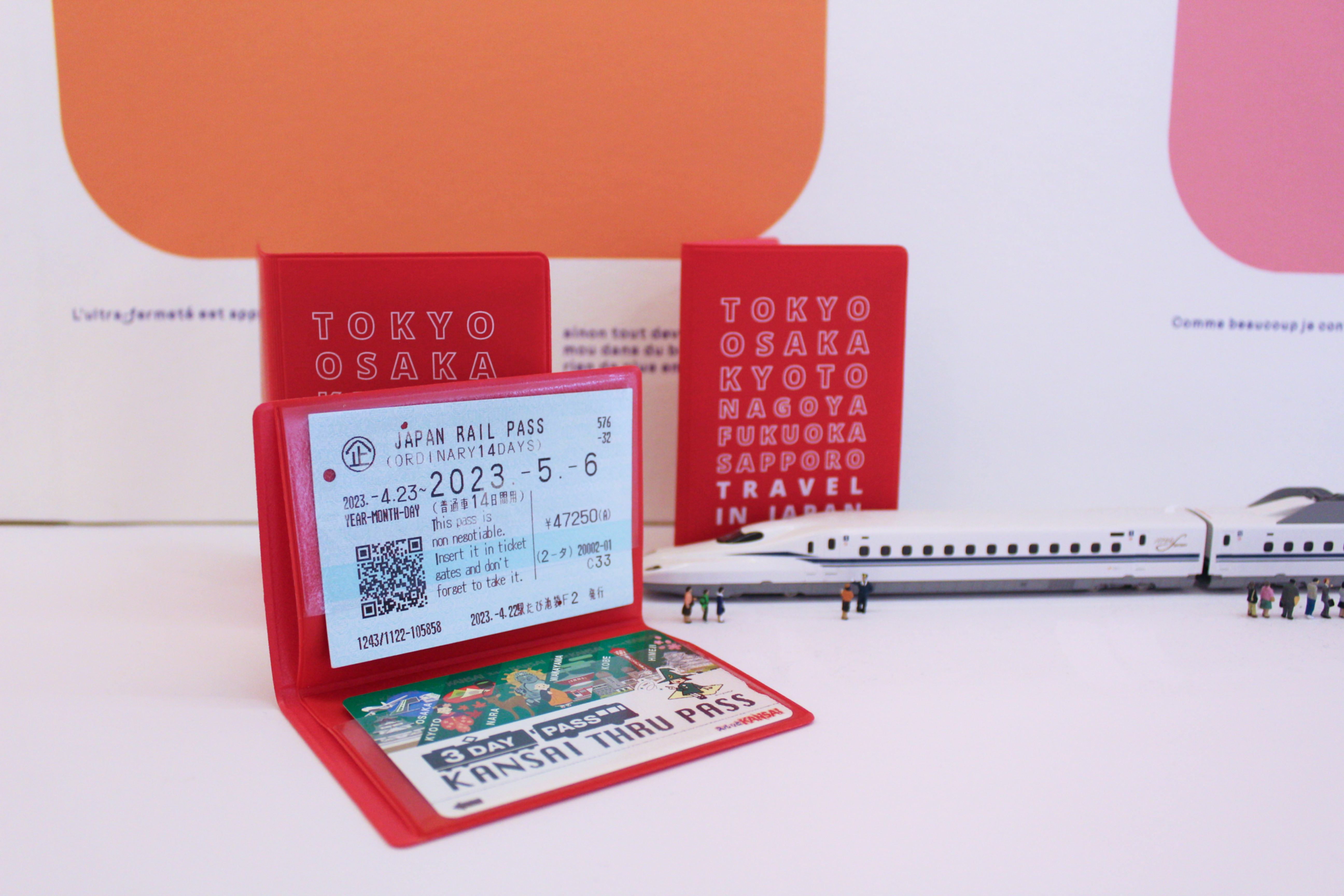
JRP Pass cover picture
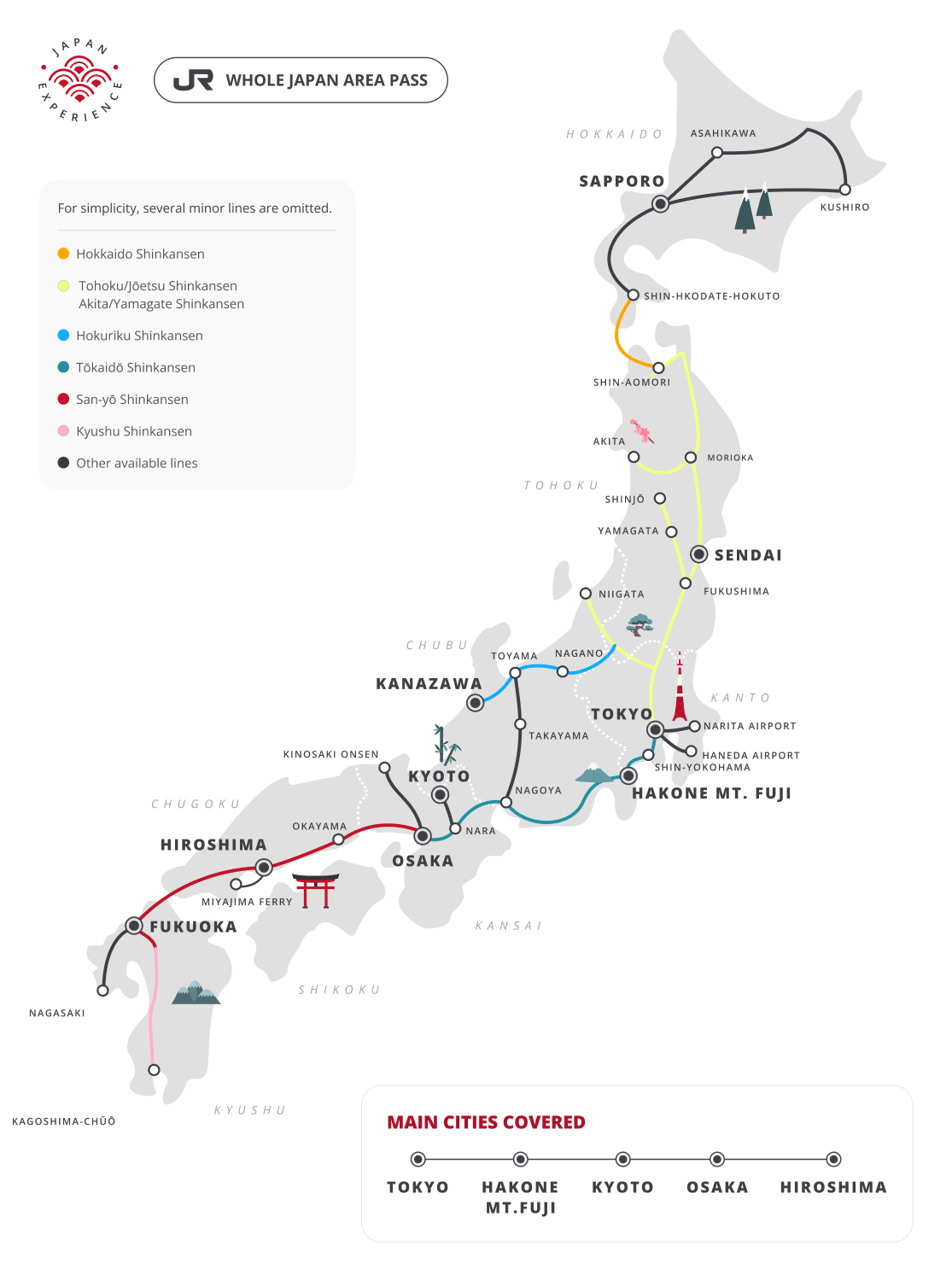
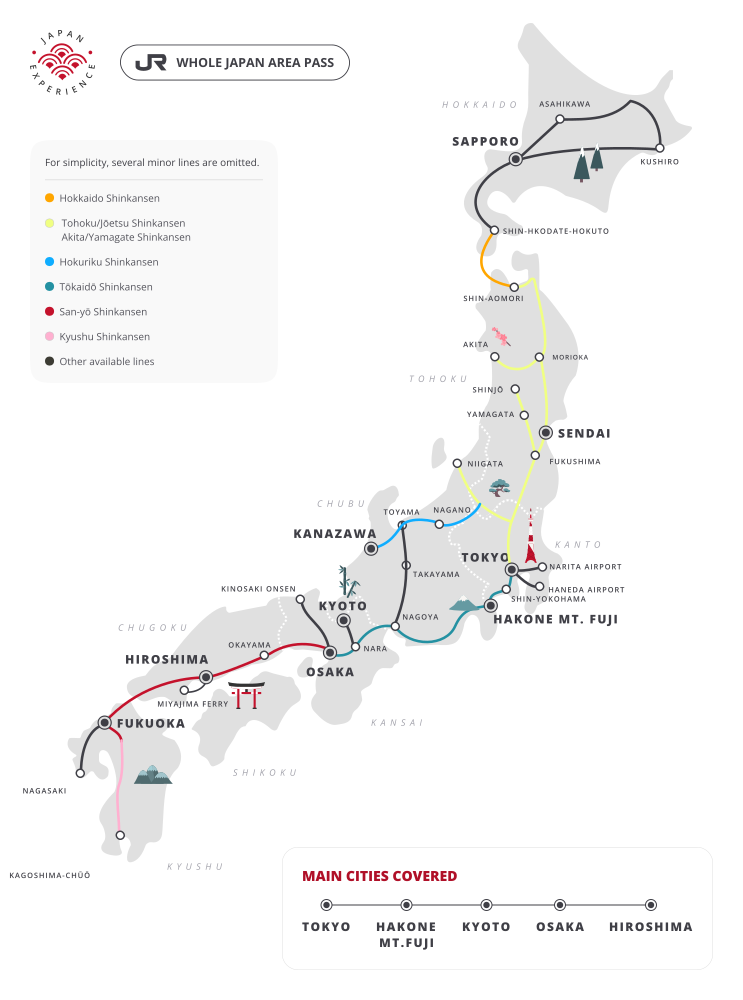
Map Whole Japan Area JR Pass English
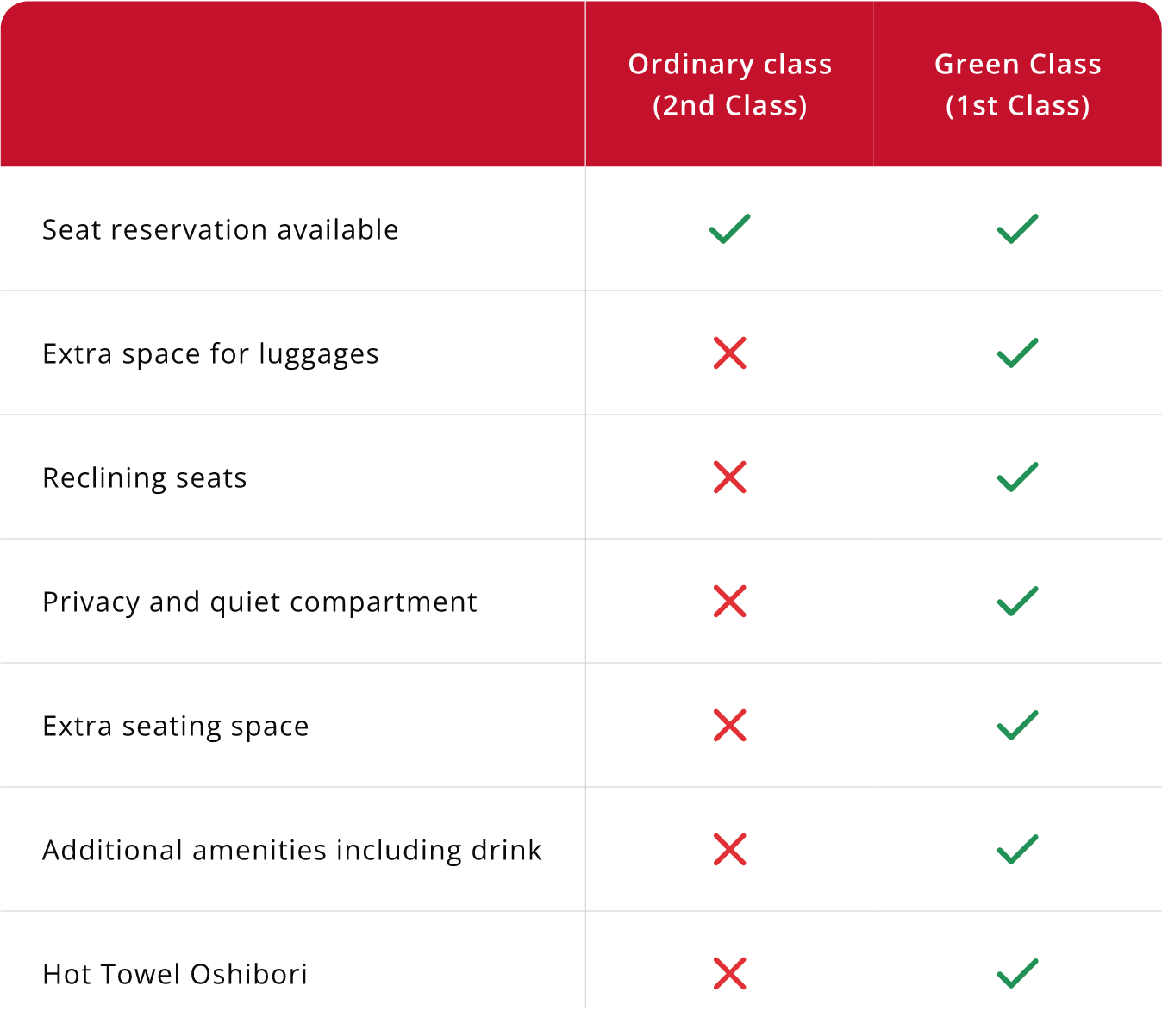
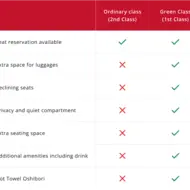
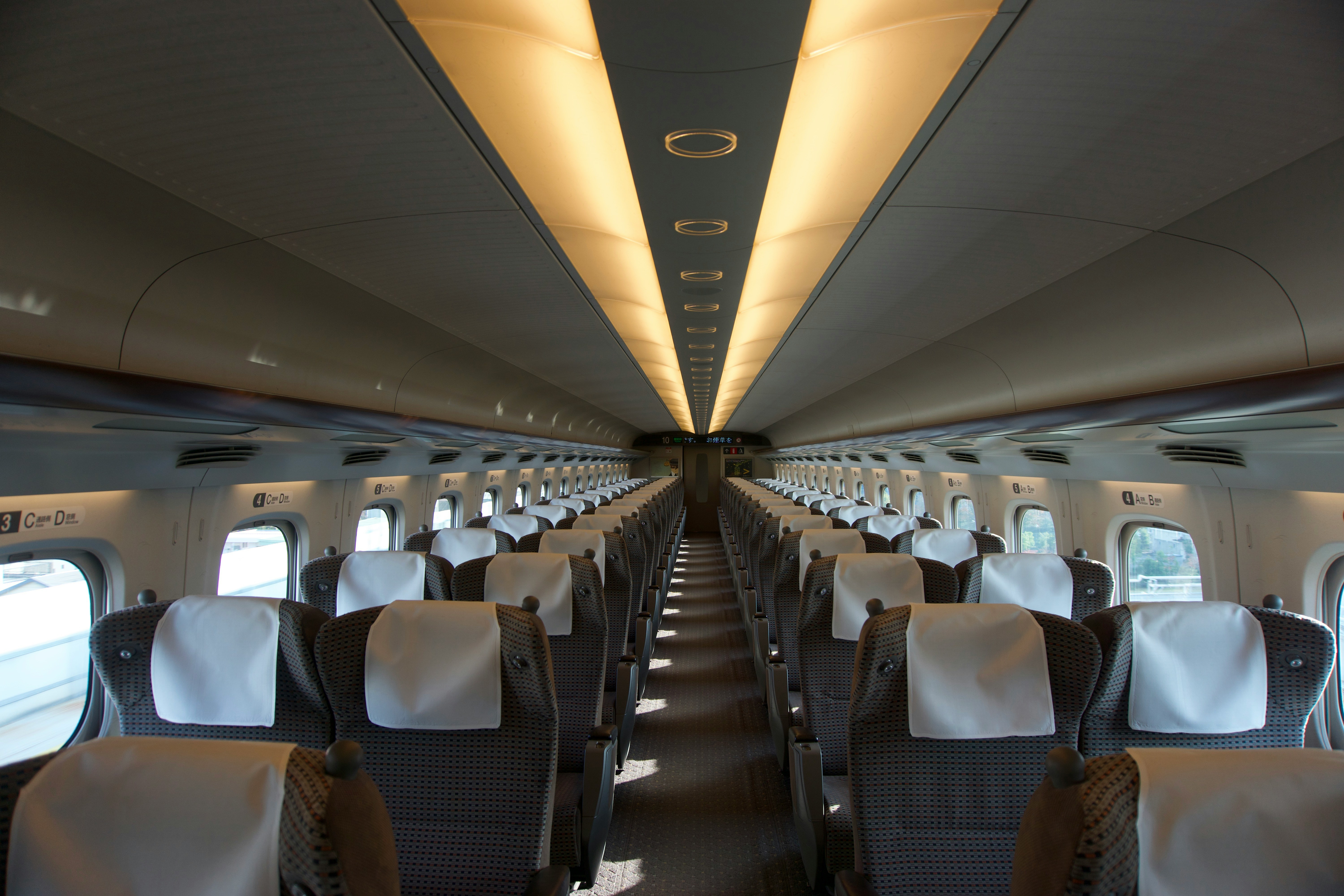
Ordinary vs green EN


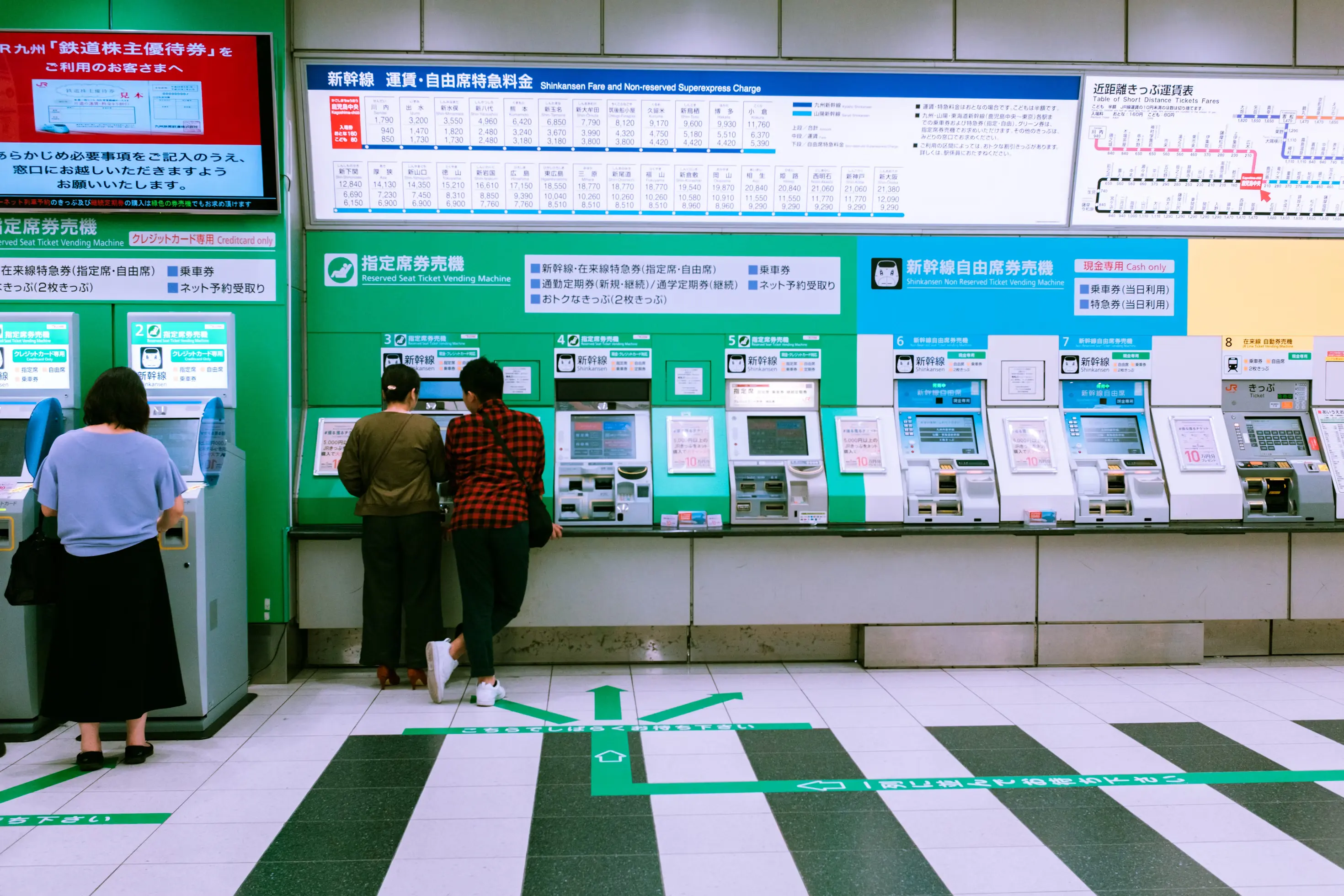
Reserved Seat Ticket Vending Machine
@christianchen
The Japan Rail Pass: journey across Japan
- Official Japan Railway Partner
- Voucher to be redeemed
- For all Japan
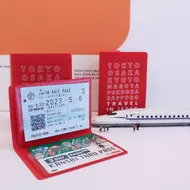
The Japan Rail Pass (JR Pass) is a specialized ticket for visitors, allowing unlimited access to the Japan Rail network for a period of 7, 14 or 21 days. The Japan Rail Pass is the most economical and the most practical for those wanting to explore Japan by train.
Covers 95% of Japan's most visited destinations
What's included in your Japan Rail Pass package?
More details about inclusions below
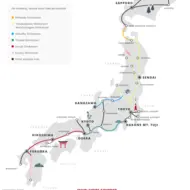
See the detailed map of lines included in the JR Pass
Book your JR Pass with Japan Experience!
Buy your JR Pass in 3 easy steps
1. Order online
2. Exchange in Japan
3. Board the train
Using the Japan Rail Pass
How to exchange the JR Pass Voucher?
Japan Experience will send you a voucher to your shipping address in your home country or even to your place of accommodation in Japan.
This voucher is not the pass itself but will be used to exchange for your pass in Japan.
To exchange your voucher for the Japan Rail Pass, follow the instructions below:
- Take your voucher(s) to one of the JR exchange offices. Many offices will be located inside JR train stations, as well as at a number of major airports. Note that not all major airports in Japan will have an exchange office.
- Present your voucher(s) to the JR exchange office staff along with the passport(s) associated with each. You will be asked to confirm your activation date. Remember, your activation date and exchange date DO NOT have to be the same. If you intend to use your pass on a later day, you are free to do so, as long as it is within 30 days of the exchange date.
- Receive your usable JR Pass and, if you wish, you'll be able to make reservations for any upcoming train rides with reserved-seating options. This can also be done at a later time at a JR office or at the machines also available at JR stations.
The activation date of the pass, once the pass has been exchanged, cannot be changed.
JR Pass Validity
- The Japan Rail Pass is valid on all JR lines throughout Japan. This includes free use of almost all Shinkansen (Hikari, Sakura, Kodama, Hayabusa etc).
Since 1st of October 2023, the Shinkansen Nozomi and Mizuho can also be used with the Japan Rail Pass. To take these two trains, travellers have to pay an extra charge in stations for the mandatory seat reservation (4.000 - 8.000 Yen). - The JR Pass is valid on the Tokyo Monorail, some lines of Aomori Railways and some local JR buses.
- The JR Pass is valid on the JR Miyajima ferry in Hiroshima.
- The Japan Rail Pass is not valid on private (non-JR) railway lines such as: Hakone-Tozan, Nankai-Koya, Fujikyu, Kitakinki-Tango.
Some JR trains do travel over non-JR tracks and JR Pass holders are required to pay a supplement for this part of the journey (either on board or at the station).
Nationwide JR Route Map
JR Map in Tokyo area
Map of JR and non-JR trains in Kyoto and Osaka Area
JR Pass Eligibility
The Japan Rail Pass is accessible to any traveler, with a non-Japanese passport, traveling to Japan with a "temporary visitor" visa of 90 days or less: tourist, business trip, family visit, etc...
People who travel to Japan for more than 90 days (working holiday, military, diplomatic, cultural, research, working visa, etc.) are not eligible.
Japanese citizens can buy and use the JR Pass if they reside abroad and have proof of a ten-year consecutive residency. This proof must be issued before purchasing the Japan Rail Pass.
Be aware, however, that the conditions are very restrictive.
You must obtain and fill in one of the following documents:
1 - An "Overseas Residential Registration" from the Japanese Embassy of your place of residence
2 - A "Certificate of Overseas Residence" from the Japanese Embassy of your place of residence
3 – For the United States, Brazil and Canada, a permanent residency card (the length of residence must be at least 10 years on the day you purchase the JR Pass).
For more information, please see our JR Pass FAQ below
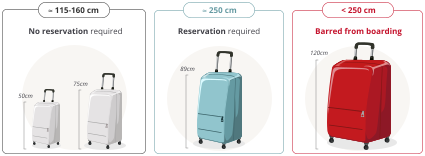
Luggage conditions
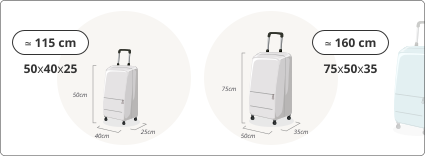
- Airplane cabin-sized suitcases (115cm)
- Airplane checked suitcases (≈160cm)
Each passenger can bring up to two pieces of less than 160cm luggage.
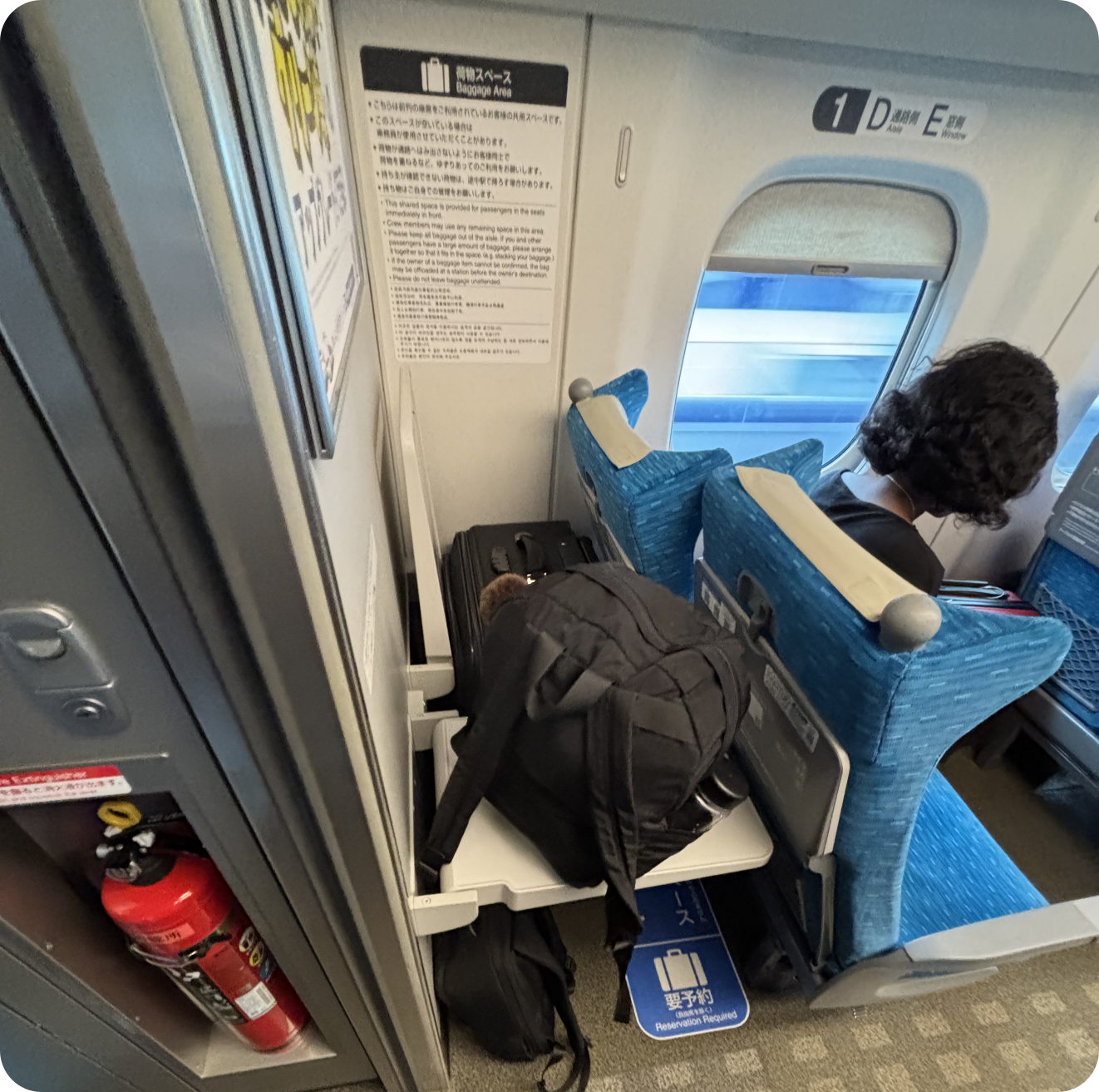
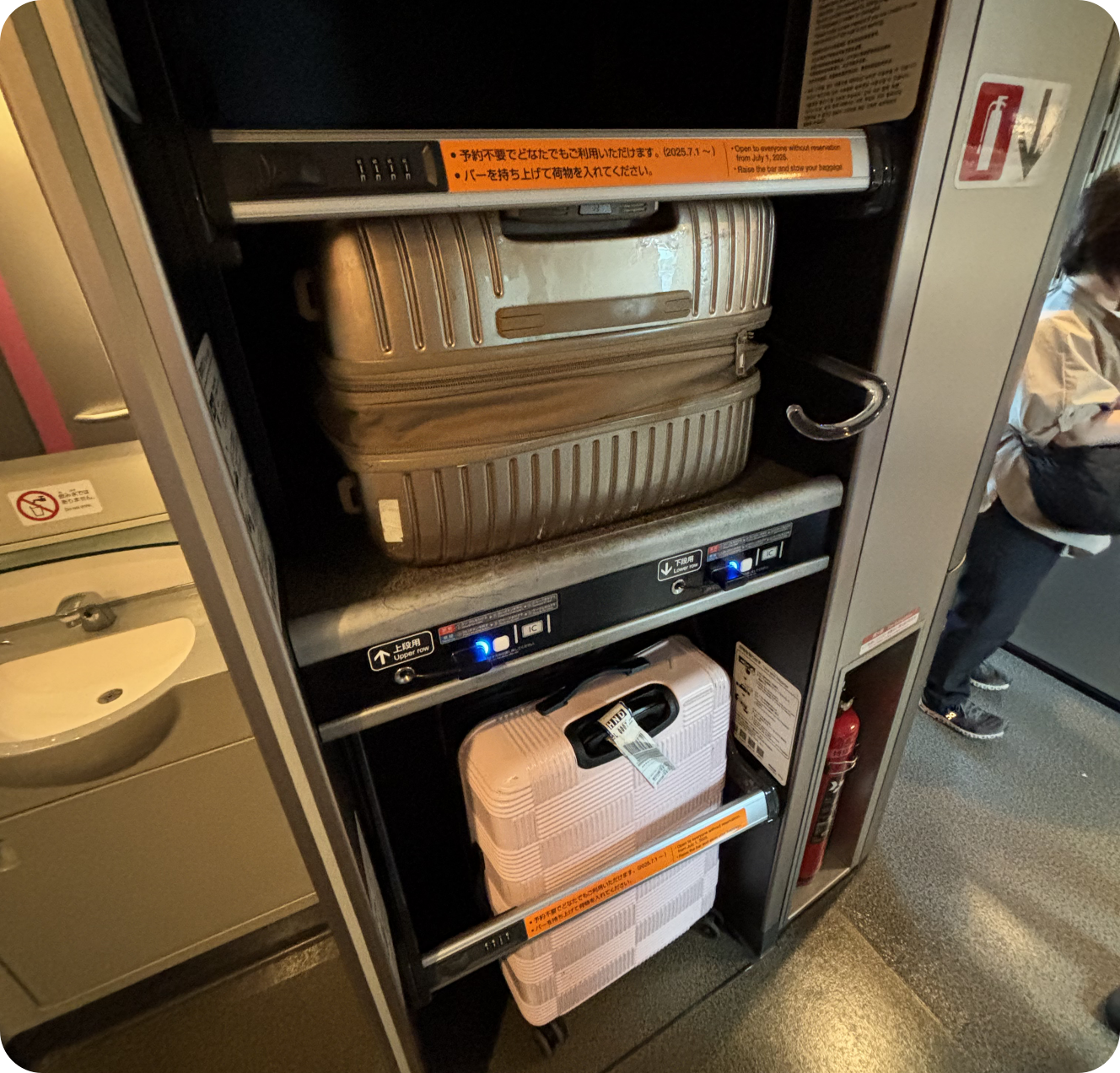
The “oversize baggage area”, located behind the last row of seats as seen below, is usable only by the travelers on these seats. If you wish to use this area to store luggage, you need to reserve these seats prior to boarding.
To note :
Luggage can be stored without a reservation in the designated “oversize baggage compartment”, in the area between cars, pictured below.
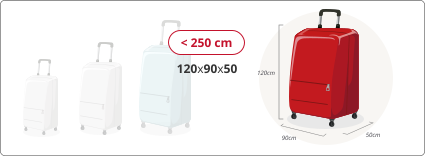
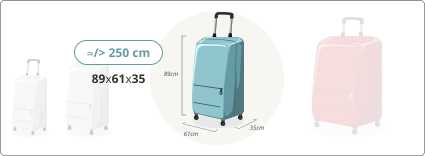
If total dimensions exceed 250cm, luggage is not allowed onboard.
Upgrade to a JR Green Pass!
The JR "Green Pass" allows you to travel using the "Green Car", the equivalent of First Class, on all valid Shinkansen (excluding Nozomi and Mizuho) and certain express lines.
The Green Japan Rail Pass offers a great value for the money, providing the option for extra comfort, spacious luggage storage, additional legroom, and amenities such as hot towels and complimentary drinks on certain lines.
If you plan on travelling during peak travel seasons (such as May, August, and September), purchasing the Green JR Pass is an excellent option, since it is less crowded and offers a great experience when riding the Shinkansen!
Cancellation conditions
The Japan Rail Pass exchange voucher issued by Japan Experience is refundable up to one year after its date of issue. There is a 15% cancellation fee withheld from the refund whatever the date of cancellation.
If you lose your Japan Rail Pass, reimbursement can only occur if the pass has not been exchanged and 6 months from the issue date of the exchange coupon. The cancellation fee remains 15% as long as there is validation from our supplier that the exchange coupon has not been exchanged, whatever the date of cancellation up to one year after the date of issue.
You are eligible for a full refund if you booked a new Japan Rail Pass with the same duration or more. In the rare event of your Japan rail pass being lost in the post, you will be eligible for a full refund, but only 6 months after purchase - the time needed to check that the voucher has not been exchanged with JR in Japan. Proof of loss can be issued on request and forwarded to your insurance company.
Please note that unused JRP Vouchers can only be refunded when successfully returned to any of our reception offices within 365 consecutive days from the purchase date.
Delivery issues will not constitute an exception so please allow sufficient time to organise your return as we are unable to offer any extensions. To be eligible for a partial refund, we must receive the unused voucher within the agreed timeframe.
Please keep in mind that the refund will be dependent on the purchase price.
Japan Experience is not responsible for any denied exchange of the voucher for the Japan Rail Pass once in Japan, regardless of the reason.
Everything You Need to Know About the Japan Rail Pass
Other transport options recommended by our experts for traveling around Japan!
Route ideas with the Japan Rail Pass
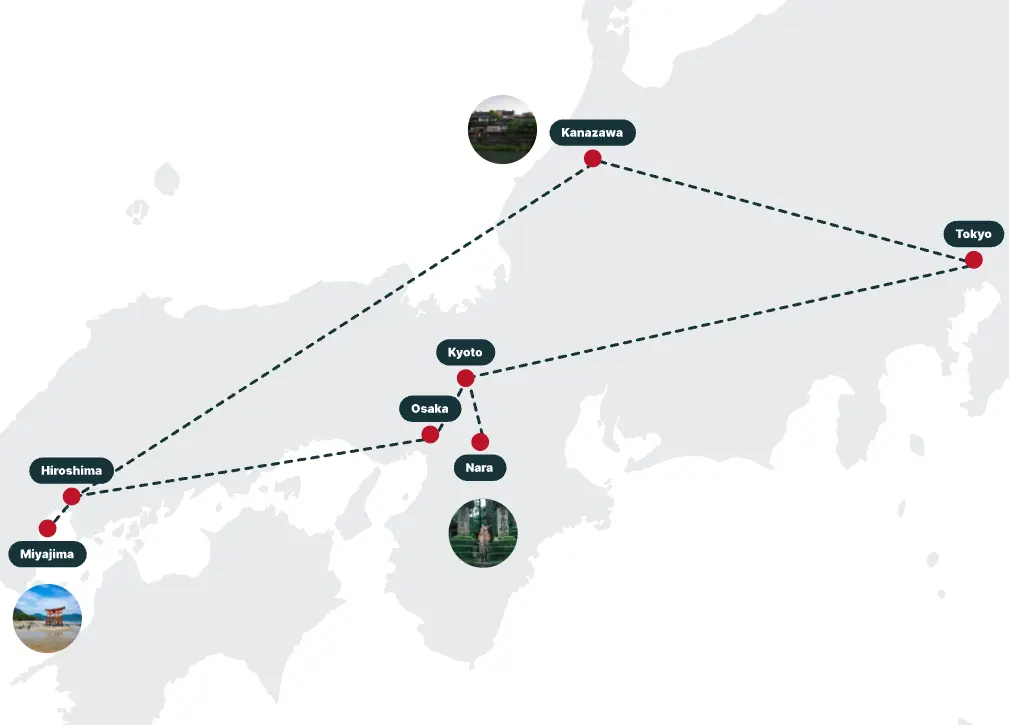
For a 7-day train journey through Japan, follow the famous “Golden Route,” which takes you from the modern capital of Japan, Tokyo, to the historic capital, Kyoto!
Excursions included: Nara and Osaka from Kyoto, Miyajima from Hiroshima.
Save 21% on this trip with a JR Pass!
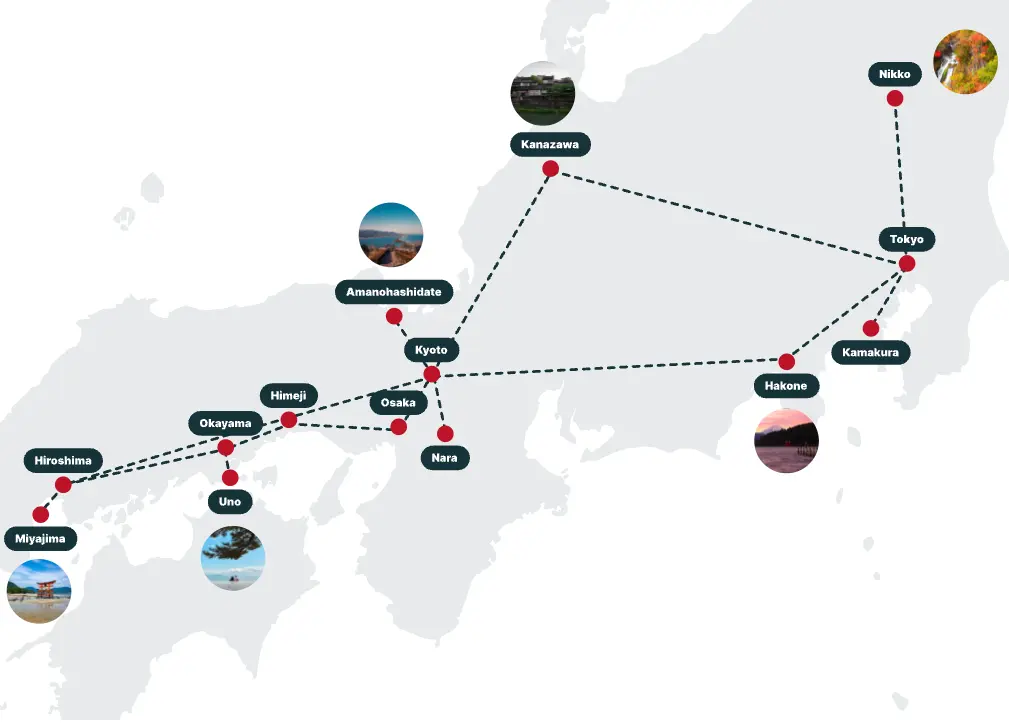
If you have two weeks to explore Japan by train, take the opportunity to add even more destinations to your “Golden Route” journey.
Other destinations include: Nikko Kamakura and Hakone from Tokyo, Amanohashidate Bay, Nara and Osaka from Kyoto, Miyajima from Hiroshima, Seto Sea islands (Naoshima, Inujima...) from Uno.
Save 12% on this trip with a JR Pass!
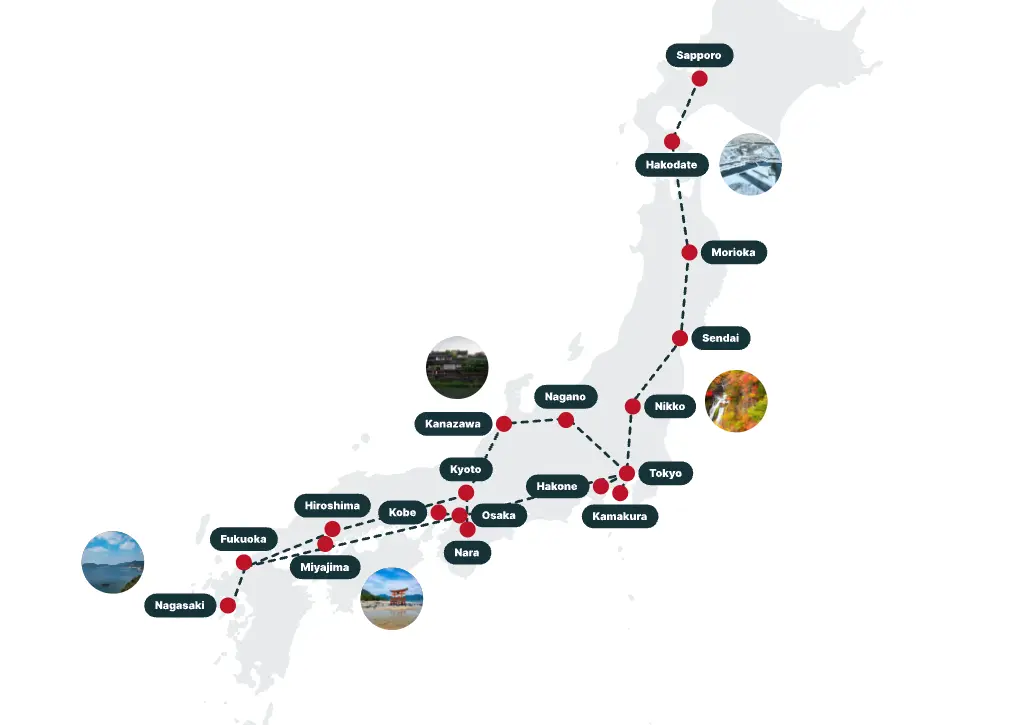
For 3 weeks of unlimited JR train coverage, you can journey across Japan from North to South!
From Tokyo, fly to Sapporo, Hokkaido. Stop off at Morioka and Sendai, which will give you access to the hidden gems of Tohoku. Extend your journey to Kyushu Island in the south, and discover the cities of Fukuoka and Nagasaki. On the way back from Kanazawa, stop off in Nagano, the ideal starting point for exploring the Japanese Alps.
Save 28% on this dream itinerary with a JR Pass!
Frequently Asked Questions about the Japan Rail Pass
The Japan Rail Pass provides access to all train lines operated by Japan Railways (JR) throughout Japan (except for some high-speed trains including the 'Nozomi' Shinkansen) for a period of 1, 2 or 3 weeks.
The Japanese railway network consists of more than 20 000 km of track. With this ticket, you can reach the main attractions on the 4 main islands of the Japanese archipelago.
The Japan Rail Pass can be used 24/7, all year long, even if it is sometimes difficult to get a seat during the holiday periods:
- From December 28th to January 6th: New year holiday during which most Japanese go back to their hometowns
- From April 27th to May 6th: 'Golden week', time during which Japanese people travel in the country
- Around August 15th: 'O-bon Festival', which brings families together.
The JR Pass allows unlimited use of JR trains, including bullet trains, for a certain period of time, and can save you money if you plan on taking multiple long-distance train journeys.
If you are traveling to multiple cities in Japan and plan on using the bullet train (Shinkansen) or other long-distance trains (local, express or limited-express trains), then the JR Pass can be a cost-effective option.
We recommend taking the Joetsu Shinkansen. Trains mainly depart from Tokyo station and Ueno Station, offering direct connections to Niigata Station without the need for transfers. Shinkansen seats are designed for comfort, and there is usually space available for luggage, including standard-sized suitcases. The Japan Rail Pass is valid on this line, making it an economical option for pass holders.
Networks that do not belong to JR
Subway lines, trams, city buses and private railway companies are not included, even when they run in the same cities as JR lines: for example the Odakyu, Tozai and Keio lines in Tokyo, the Kintetsu network in Kansai, the Midosuji, Tanimachi and Yotsubashi lines in Osaka, or the Kuko, Hakozaki and Nanakuma lines in Fukuoka. For these journeys you can use a prepaid IC card such as Suica, or consider a dedicated day pass in Tokyo, Osaka or Kyoto.
JR long-distance buses
Local JR buses are included, but JR Expressway Buses, which connect major cities, are not.
The ferry to Korea
The JR ferry to Miyajima is included; the JR Hakata–Busan crossing is not.
The Nozomi and Mizuho Shinkansen
These are indeed JR trains, but they are not covered by the pass. You can still take them by booking a paid seat reservation — expect ¥4,000 to ¥8,000. The Hikari and Sakura, by contrast, are included, serve the same stations and run roughly every 30 minutes.
Sections running on private track
Some JR trains run on tracks belonging to private companies. You then pay the full fare for that section, at the counter before boarding or directly on board. This is the case for services to Hakone and Kawaguchiko, and for the train from Shinjuku to Nikko, which leaves the JR network at Kurihashi: the pass only covers you as far as that station.
Careful: passing through a ticket gate does not guarantee that your train is covered!
For a day trip to Nara from Kyoto, the train is the most convenient and efficient mode of transport. We recommend using the JR Nara Line. Rapid trains (Rapid or Miyakoji Rapid) offer a direct and shorter journey. It is also possible to use the Kintetsu line, but this often requires a train change at Yamato-Saidaiji if you depart from Kyoto Station, and its departure point in Kyoto is not the main JR Kyoto Station concourse. The JR line is generally preferred for its simplicity and its coverage by the Japan Rail Pass.
By Shinkansen: The most efficient way to travel to Karuizawa from Tokyo station is by taking the Shinkansen (bullet train) on the Hokuriku Shinkansen line. The "Asama" services are those that most frequently serve Karuizawa Station from Tokyo station . "Kagayaki" trains are faster but generally do not stop at Karuizawa.
Departure Station: Tokyo station is the main departure point.
Arrival Station: Karuizawa Station.
JR Pass Validity: The Japan Rail Pass is valid for Asama Shinkansen services on the Hokuriku Line. It covers both unreserved and reserved seats in Ordinary Car class.
Ordinary (standard)
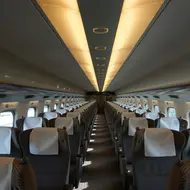
Reclining seats, tray tables, coat hooks, opening windows and power sockets. Reserved or non-reserved seats, as you prefer. This is the class included in the standard JR Pass.
Green Car
More legroom and seats that recline further. Access requires a reservation and a supplement — unless you have chosen the JR Pass Green Car, which gives you access at no extra cost.
Gran Class
The most luxurious level, with a premium interior and maximum comfort. It is only offered on certain trains on the Tohoku, Hokkaido, Joetsu and Hokuriku Shinkansen lines.
These are indeed JR trains: you can board them with your JR Pass. However, only the base fare is covered, whether your pass is ordinary or Green. To travel in Gran Class, you must also pay the limited express fare as well as the Gran Class supplement.
Advance reservation is not possible: enquire directly at the JR ticket office ("midori no madoguchi").
Is the Green Car worth the supplement?
The gain in comfort is real, but two points are worth knowing before you decide.
Reservation is compulsory: unlike non-reserved cars, you cannot board the Green Car spontaneously. And each train has only a limited number of Green cars, which sell out quickly in high season — some travellers who paid the supplement were unable to use it on all their journeys.
If your trip falls during Golden Week, Obon or the New Year period, book your Green Car journeys as soon as you exchange your order.
We recommend using the Shinkansen network to travel to Yamagata from Tokyo station. This option is the most efficient and comfortable, providing a direct and fast connection between central Tokyo station and Yamagata Prefecture.
The Shinkansen journey between Kumamoto and Kagoshima-Chuo typically takes between 45 and 60 minutes. The 'Mizuho' services are the fastest, followed by the 'Sakura' services. These high-speed trains operate frequently throughout the day, providing excellent flexibility for travelers.
Yes, as long as your exchange order has not yet been exchanged for the pass in Japan.
Cancellation fee
15% of the total ticket amount, whatever the cancellation date. Shipping costs are not refunded.
Deadline
Your unused exchange order must reach one of our offices within 365 days of its issue date.
The date on which we receive the exchange order is what counts. Please allow enough time for it to reach us: a postal delay cannot justify missing the deadline, and no extension is granted.
If you lose your pass
If you lose your Japan Rail Pass, a refund is only possible if the exchange order has not yet been exchanged. The fee remains 15%, whatever the cancellation date, within one year of the exchange order's issue date. The request can only be processed, however, once a period of 4 months has elapsed from that same issue date.
If your exchange is refused in Japan
Japan Experience cannot be held responsible if the exchange of your order for the Japan Rail Pass is refused once you are in Japan, for whatever reason.
The Shinkansen journey between Hiroshima and Okayama is quick. With the Nozomi or Mizuho trains, the journey time is around 35 to 40 minutes. For the Sakura or Hikari trains, the journey usually takes between 40 and 50 minutes. Kodama Shinkansen trains make more stops and therefore take longer. All of these trains run on the Sanyo Shinkansen line, which is known for its punctuality.
To get to Matsumoto Castle from Kyoto, the journey involves two main train stages. We recommend taking a Shinkansen (Tokaido Shinkansen) from Kyoto Station to Nagoya Station. From there, it is necessary to make a transfer to take the Limited Express Shinano train towards Nagano, and alight at Matsumoto Station. Once at Matsumoto Station, Matsumoto Castle is accessible on foot in approximately 15 to 20 minutes. Local buses are also available from the station, with the journey taking about 5 to 10 minutes. Japanese trains are renowned for their punctuality.
The journey from Hakata to Nagasaki is a two-step process. Travelers first take the Limited Express Kamome from Hakata Station to Takeo-Onsen Station. At Takeo-Onsen, they make a seamless transfer to board the Nishi-Kyushu Shinkansen Kamome, which takes them directly to Nagasaki. This transfer is designed to be smooth, often involving a same-platform connection.
To travel from Sapporo to Noboribetsu Onsen, the most common route combines a train journey and a short bus transfer.
Train: From Sapporo Station, take a JR Limited Express train (e.g., Limited Express Hokuto or Suzuran) bound for Hakodate. The journey takes approximately 1 hour 15 minutes to 1 hour 30 minutes to Noboribetsu Station. These trains are equipped with comfortable seats and luggage racks for travelers.
Bus: Upon arrival at Noboribetsu Station, local Donan Buses are available directly in front of the station. These buses provide direct service to the Noboribetsu Onsen area, including hotels and Jigokudani, in approximately 15 to 20 minutes. The bus service is frequent and synchronized with train arrivals.
Our travelers' reviews
Breadcrumb
- Home
- Transportation
- The Japan Rail Pass: journey across Japan