

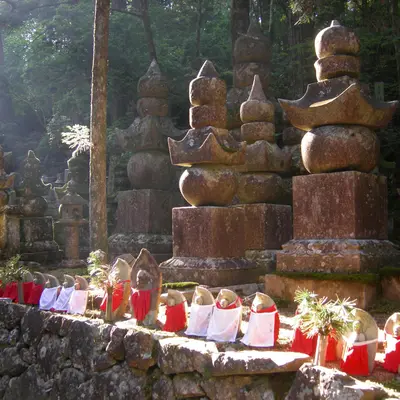
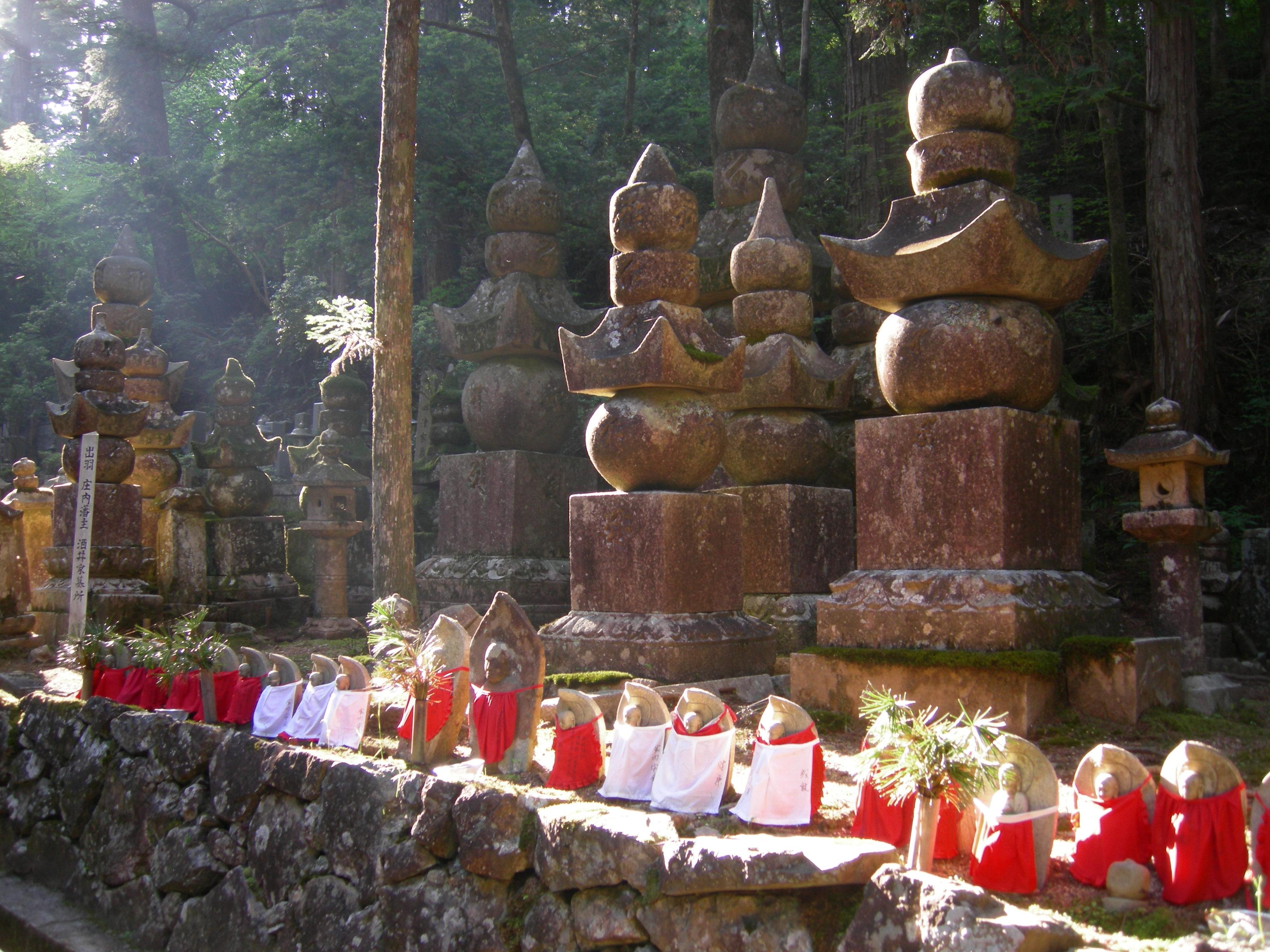
Statues of Buddha wearing a vermilion neck bib.
DR
Koyasan World Heritage Digital Ticket
- Economic and simple
- Unlimited travel


Immerse yourself in a spiritual experience in the heart of Japan with the KOYASAN 2-day pass, and gain easy access to places rich in culture and serenity. This pass offers you flexibility, practicality and, above all, the opportunity to visit and travel around the mystical place that is Koyasan.
It's the ideal option if you want to visit Koyasan from Osaka, as it covers your entire itinerary and gives you access to must-see sites such as Kongobuji, Okunoin and Danjo-Garan.
Benefits of the KOYASAN 2-Day Pass:
- Round-trip tickets between Nankai Namba station (Osaka) and Koyasan station.
- 2 consecutive days of unlimited bus travel in the Koyasan region.
- Easy access to all major Koyasan sites.
- Flexibility to discover Koyasan at your own pace.
PLEASE NOTE: This voucher is valid for use for one month after the issue date
Why choose the Koyasan World Heritage Digital Ticket?
Explore the Koyasan region effortlessly with this all-in-one digital pass! Enjoy unlimited rides on Nankai trains, cable cars, and buses within Koyasan, giving you seamless access to iconic sites like Okunoin Cemetery, Kongobuji Temple, and Danjo Garan. Save time, money, and stress while immersing yourself in the spiritual beauty of this UNESCO World Heritage Site. Start your journey today! Find out more about the included lines below.

Highlights of the Koyasan World Heritage pass



How to use the Koyasan World Heritage Digital Ticket?
Delivery
Your Koyasan World Heritage Digital Ticket (e-ticket) will be delivered to the email address used for booking within 5 working days of booking. If you order this pass more than one month before the date of your trip, we will send you a link within one month of the travel date you provide when booking.
It is important to check your spam mailbox, in case your Hakone Free Pass ends up there.
If you want to use it as soon as possible, do not hesitate to contact us.
How does the Koyasan World Heritage pass work?
- Once you've received the link, click on it to access your e-ticket on your cell phone when you are about to use the Koyasan World Heritage pass.
- Once you have clicked on "use ticket", the 2-day countdown will start immediately. Do NOT click the link if you are not ready to start using the pass.
- Enjoy Koyasan with your World Heritage Digital Ticket!
(Please note that we will not provide a new link or refund you in the event of an error on your part).

@Nankai

@Nankai
Validity
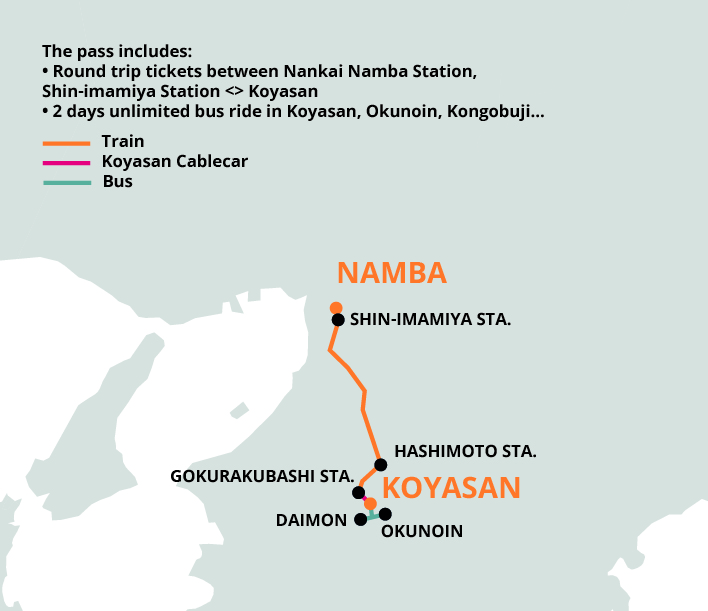
The pass is valid for 2 days. It includes the Nankai Koya Line (from Osaka-Namba to Gokurakubashi). An additional fare of 790 yen ($5/4€) is required for the Limited Express trains, to be paid at ticket offices. It includes:
- Nankai Koya Line (Osaka-Namba to Gokurakubashi)
- Koyasan Cable Car (Gokurakubashi to Koyasan Station)
- All buses in the town of Mount Koya
Cancellation and Modification
- We will refund 85% of the purchase price if you have not yet activated your pass, and you contact us to request cancellation at least 5 days before the expiry date.
- If your pass has already been activated or has expired, we are not able to offer cancellation or refund.
Eligibility
- All foreigners, whether tourists or long-term visitors, can use the Koyasan World Heritage Digital Ticket.
- Japanese passport holders are not eligible for this pass.
Discounts
The Koyasan World Heritage Digital Ticket offers the following discounts at Koyasan area attractions:
- 200 yen off at the Reihokan Museum
- 100 yen off at the Kondo Hall
- 100 yen off at the Daito Pagoda
How to get from Osaka to Koyasan
Take a train from Nankai Osaka-Namba station to Koyasan. To do so, scan your QR code at the ticket gates of Nankai Osaka-Namba station. Board the Nankai-Koya Line, which will take you to Gokurakubashi Station. From there, take the cable car directly to Koyasan Station. The whole journey takes about 1 hour 40 minutes.

@Wikimedia
Getting around Koyasan:
Once you've arrived at Koyasan station, use the local Nankai Rinkan buses to get to your shukubo or the various temples. Enjoy unlimited travel in the region for 2 days with the pass.
Return to Osaka:
For the return journey, follow the same route in the opposite direction. Take the cable car from Koyasan station to Gokurakubashi, then the train to Nankai Namba station in Osaka.
Limited Express option:
If you want a faster, more comfortable journey, you can choose to take the Limited Express train. Please note that this option requires a reservation and a supplement of 790 yen for adults (400 yen for children).
What to see and do with the Koyasan World Heritage Digital Ticket?
One of Japan's most important monastic complexes, Koyasan, perched in seclusion on high plateaus, is a mecca of Buddhist worship.
Founded in 819 by the monk Kukai, Mount Koya is the headquarters of the Shingon Buddhist sect. Situated at an altitude of 800 metres, Mount Koya is home to some 120 temples, part of which, called shukubo, are also used as lodgings for pilgrims.
A place of worship and pilgrimage, everything on Mount Koya exudes sacredness. From Kongobuji, the main temple where the highest priest of Koyasan resides, to Okunoin, an immense cemetery hidden in a cedar forest at the center of which is the mausoleum of Kukai, via the vermilion pagoda of Danjo Garan.

Laurent Gence @unsplash
In search of spirituality
Kongobuji: Begin your Koyasan adventure with a visit to the main temple, home to Koyasan's highest priest. Founded by warlord Toyotomi Hideyoshi on the death of his mother and rebuilt in 1861, Kongobuji temple contains screen paintings by Kano Tanyu and other painters of the Kyoto Kano school.
Okunoin: Crossing the Ichi no Hashi bridge, which opens the way to Okunoin, is like crossing a bridge between two worlds. On the other side, the atmosphere changes, and the air feels charged and sacred. The towering cedars that grace the first burial grounds mask the sky and the exit from the paved path that winds through the woods.
Danjo-Garan: This temple was one of the first complexes built by Kobo Daishi in Koyasan. Vast, silent and soothing, it abounds in temple buildings and a sumptuous pagoda with a unique atmosphere.

Hanna Eberhard @unsplash
Cultural immersion
Stay in a shukubo: Experience a unique journey in Japan, sleeping in a Japanese temple lodging allows you to immerse yourself in the mysterious atmosphere of monastic life.
Shukubo, which literally means "sleeping with the monks", is a must for many visitors to Japan.
This experience of staying in a Buddhist temple gives you an insight into the daily life of Japanese monks. Take part in meditation sessions, attend morning prayers and enjoy traditional vegetarian meals.

@Pixabay

@Pixabay

@Pixabay
Japan Experience recommends:
- Kumagai-ji Temple - Located in the heart of Koyasan, Kumagai-ji Temple offers a peaceful, authentic retreat. Founded centuries ago, this Shukubo is steeped in history and spirituality.
- Ichijo-in - Nestled among the majestic cedars of Koyasan, Ichijo-in is a sanctuary of tranquility and reflection.
- Saizen-in Temple - With its peaceful gardens and elegant architecture, it embodies traditional Japanese aesthetics.