
The UNESCO World Heritage Sites of Japan
- Published on : 23/04/2026
- by : Clement
- Youtube

Torii at Miyajima, Hiroshima
alessandro Stech, Unsplash
Japan boasts a large number of UNESCO World Heritage sites, testifying to the richness and diversity of its heritage. From ancient temples to preserved natural environments, these sites offer a glimpse of the country's many facets. Together, they form a sample of sites that provide a better understanding of Japan through 26 of its prefectures. Discover all these places from north to south with Japan Experience.
Shiretoko Peninsula, Hokkaido
Located at the northeastern tip of the island of Hokkaido, the Shiretoko Peninsula is one of Japan's most unspoiled natural areas. Listed as a UNESCO World Heritage Site for the richness of its ecosystems and biodiversity, the area is renowned for its dense forests and the presence of wild animals such as the brown bear. Visitors can discover spectacular scenery by hiking, cruising along the coast or observing wildlife in its natural habitat, including whales and orcas.
Jômon prehistoric sites, Aomori prefecture
The prehistoric sites of Sannai-Maruyama are part of a group of ancient sites inscribed on the UNESCO World Heritage List, belonging to the Jōmon culture, which developed in Japan over several millennia. These sites have been recognized for their exceptional contribution to the understanding of sedentary hunter-gatherer societies, the earliest ancestors of the Japanese. Visitors can observe reconstructions of villages, typical semi-buried dwellings and large wooden structures, offering a glimpse of life at that time.

Traditional stilt housing from the Jômon era
wikimedia commons
Mount Shirakami-Sanchi, Aomori Prefecture
Situated between the prefectures of Aomori and Akita, the Shirakami-Sanchi is home to one of Japan's last virgin stands of beech forest. It is renowned for the value and rarity of its ecosystem, which has remained intact for thousands of years and once covered the entire northern part of the island of Honshu. This vast mountainous territory is accessible via a few hiking trails, allowing you to discover waterfalls, rivers and dense vegetation. It's an ideal destination for nature lovers wishing to explore an unspoiled, uncrowded environment.
Discover northern Japan!

Shiretoko National Park
wikimedia Commons
Hiraizumi, Iwate Prefecture
Located in Iwate Prefecture, the town of Hiraizumi was an important political and cultural center in the 12th century, rivaling even Kyoto. UNESCO World Heritage sites bear witness to the influence of buddhism on Japan. Among the most remarkable are the Chūson-ji temple, famous for its golden pavilion, and the Konjikidō, covered in gold leaf. Other relics, sometimes more discreet, complete the picture and provide a better understanding of the historical and spiritual importance of the region, such as the Mōtsū-ji temple. Today, Hiraizumi offers a visit that's both cultural and peaceful, where temples, gardens and surrounding landscapes form a coherent and ancient whole.


Sado Kinzan gold mine, Niigata Prefecture
Located on the island of Sado, off the coast of Niigata Prefecture, the Sado Kinzan gold mine was one of Japan's most important mining sites from the 17th to the 19th century. Listed as a UNESCO World Heritage Site since 2004, it is recognized for its major role in the country's economy during the Edo period. Today, visitors can wander through ancient galleries, observe reconstructions of mining conditions and discover the walls dug into the mountainside.
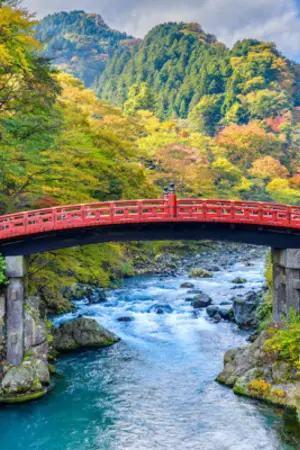
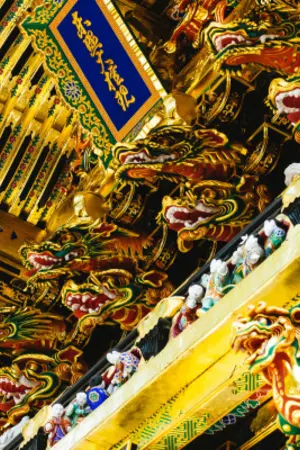
Shrines and temples of Nikko, Tochigi prefecture
Located in the heart of a wooded mountain region, the UNESCO-listed Nikkô area, with its numerous shrines and temples, is one of Japan's most richly decorated religious ensembles. They are a perfect example of the syncretism between shinto and Buddhism, with exceptional artistic craftsmanship developed during the Edo period.
The site includes the Nikkō Tōshōgū, dedicated to Tokugawa Ieyasu, founder of the Tokugawa shogunate dynasty. It is distinguished by particularly elaborate ornamentation, blending colorful carvings, gilding and intricate motifs, including the famous wisdom monkeys. Nearby, the Rinnō-ji and the Futarasan-jinja shrine complete the ensemble, all surrounded by centuries-old cedar forests.

Nikko - Toshogu shrine
@Sean Pavone / 123RF

Futarasan Shrine, Nikko
@Wikimedia

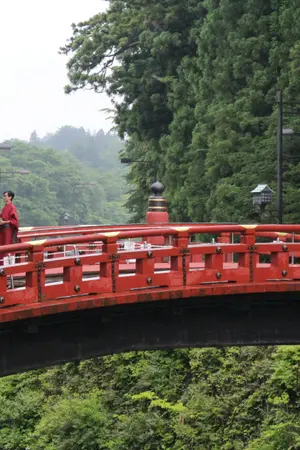
Japanese bridge in Nikko
©Sean Pavone/123RF

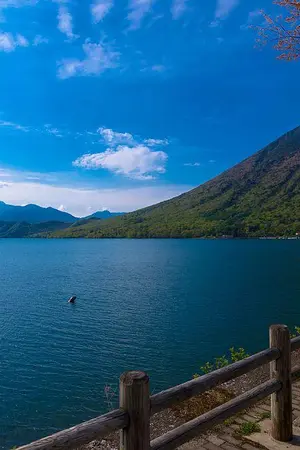
Nikko - Kegon falls and Chuzen-ji lake
@Sara Winter / 123RF

Nikko Jizo
@Alyson Hurt on Flickr, CC BY-NC-SA 2.0
Nikkō is one of Japan's must-see tourist destinations. Easily accessible from Tokyo, the site offers a cultural and immersive experience in a region where you can also go hiking and enjoy the onsen.
Our tours and activities in Nikkô
Tomioka silk spinning mill, Gunma prefecture
The Tomioka Silk Mill (and its associated sites) is one of Japan's first modern industrial sites and has been a UNESCO World Heritage Site since 2014. Built in 1872, it bears witness to the role played by the silk industry in the country's modernization from the Meiji era. Today, a visit to the site reveals the production workshops, the original buildings and the working techniques of the time.
National Museum of Western Fine Arts, Tokyo
Located in Ueno Park in Tokyo, the National Museum of Fine Arts of the West is the work of architect Le Corbusier. The building illustrates the principles of architectural modernism and houses an important collection of Western art, from the Renaissance to the early 20th century. The tour features works by major European painters and sculptors in an accessible location in the heart of Tokyo.
Mount Fuji, Yamanashi and Shizuoka prefectures
Located on the border between the prefectures of Yamanashi and Shizuoka, Mount Fuji, Japan's highest peak and one of its most emblematic symbols, became a UNESCO World Heritage Site in 2013. Considered a sacred mountain, it has long been a place of pilgrimage, particularly for Shintō and Buddhist practices. Even today, visitors still flock to the mountain to take on the challenge of its ascent.
The listed site includes a series of shrines, pilgrimage trails and viewpoints dotted around the volcano. These include such landmarks as the shrine of Fujisan Hongū Sengen Taisha or landscapes that inspired Hokusai for his famous prints.

View of Mount Fuji from Kawaguchiko, Yamanashi
@Wikimedia
Today, Mount Fuji attracts mountaineers and hikers alike, who come to admire its scenery from the surrounding area in the Five Lakes region or from the warmth of an onsen.
Enjoy your visit to Mount Fuji with Japan Experience!


Historic villages of Shirakawa-go and Gokayama, Gifu and Toyama prefectures
The villages of Shirakawa-go and Gokayama are UNESCO World Heritage Sites for their traditional gasshō-zukuri dwellings. These steeply thatched houses, designed to withstand heavy snowfalls, bear witness to a way of life adapted to the harsh climatic conditions of these mountainous regions.
Some of them are still inhabited, while others have been converted into inns or museums, offering a glimpse of rural life in days gone by. A balance has been struck between tourism and local life, offering visitors an authentic immersion in a preserved traditional setting.
The village is particularly popular with visitors in winter, when spectacular snowfalls transform the landscape.

Ogimachi in Shirakawago, Gifu
@Wikimedia

Shirakawago, a traditional mountain village during winter
123RF OK Paid - Photo Credit vichie81

Shirakawago, a world heritage village typical of the Japanese Alps
©amstk/123RF
Historic monuments of ancient Kyoto (Kyoto, Uji and Otsu), Kyoto Prefecture
One of the first UNESCO World Heritage sites in Japan, the historic monuments of ancient Kyoto also extend to the neighboring towns of Uji and Otsu. This group of 17 major sites bears witness to the central role played by Kyoto as imperial capital for over a thousand years and its role in the development of classical Japanese culture.
Kyoto is a must for Japanese tourists. Here you'll find everything that makes up a postcard. Japan: Buddhist temples, Shinto shrines, castles and Japanese gardens.
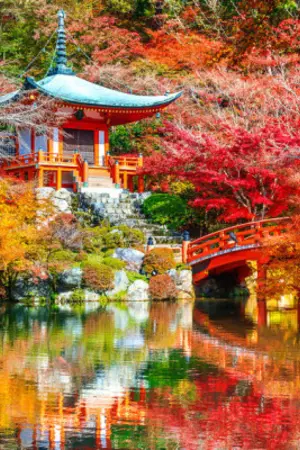
Among the city's most emblematic landmarks are Kinkaku-ji, also known as the Golden Pavilion; Kiyomizu-dera and its wooden terrace overlooking the city, and Nijo Castle, residence of the Tokugawa shoguns. A little further south, in Uji, you'll find the Byōdō-in, almost a thousand years old and depicted on the obverse of 10-yen coins.

Kinkakuji
@Kim Ahlström on Flickr, CC BY-NC-SA 2.0

Kiyomizu dera temple in Kyoto during autumn leaves
luciano Mortula/123RF

Kyoto - Nijo-jo - #Spring
@Sean Pavone / 123RF

Byodo-in in Uji, Kyoto
@Pixabay/ PublicDomainPictures

The main pavilion of the Byôdô-in temple
Wikimedia Commons
On the Otsu side, towards Shiga Prefecture, the listed complex includes Enryaku-ji Temple, located on Mount Hiei, on the heights near Lake Biwa. Founded in the 8th century, this vast monastic complex, a center of the Tendai school of Buddhism, is divided into several zones in the heart of the forest.
Discover Kyoto and its UNESCO sites with Japan Experience!

Horyu-ji and historic monuments in Nara, Nara Prefecture
In the 8th century, a crucial period in Japan's political and cultural history, Nara was the country's first permanent capital. As a prosperous new city, many buildings of cultural and religious significance were built here, particularly in connection with the arrival of Buddhism on the archipelago. No fewer than 78 of these have survived the ages and are now listed as UNESCO World Heritage Sites. These include Shintō temples and shrines, as well as the remains of the Heijō Palace, one of the first great imperial complexes, inspired by Chinese architectural models.
Other major sites include the Tōdai-ji, famous for its monumental bronze Great Buddha; the Kasuga-taisha, with its many lanterns; and the Kōfuku-ji. These sites are located in Nara Park, where the city's emblematic fallow deer roam freely.


A little further south is Hōryū-ji Sannai, home to some of Japan's oldest Buddhist monuments. The complex comprises 48 referenced buildings, including a five-story pagoda within the main compound.
Sacred sites and pilgrimage routes in the Kii Mountains, Nara, Wakayama and Mie prefectures
Located on the Kii Peninsula, in the south of the Kansai region, the sacred sites and pilgrimage routes of the Kii Mountains stretch across the prefectures of Wakayama and Mie. The UNESCO site covers more than 500 hectares and includes major places of worship and their network of historic paths, used for centuries by pilgrims.
Among the most emblematic sites are the Kumano shrines (Kumano Sanzan), the village of Koyasan and the ancient Kumano Kodo, which winds through mountains and forests. This vast complex illustrates the syncretism of Japanese cults (Shinto, Buddhism and mountain worship), as well as the close link between spirituality and nature in Japanese tradition.
Mozu-Furuichi kofun complex, Osaka prefecture
Kofun are the keyhole-shaped burial mounds typical of ancient Japan. The Mozu-Furuichi Kofun site features 49 burial mounds dating from the 3rd to 6th centuries. These monumental tombs, attributed to the ruling elite such as Emperor Nintoku, are among the world's largest funerary edifices.
Himeji Castle, Hyogo Prefecture
Located in Hyogo Prefecture, Himeji Castle is one of the most remarkable examples of Japanese feudal architecture. Listed as a UNESCO World Heritage Site since 1993, it is renowned for its excellent state of preservation, as well as for the complexity of its defensive system, designed to slow down attackers through a succession of gates, walls and labyrinthine paths.
Nicknamed the "White Heron Castle" because of its white plaster walls, it boasts an elegant, harmonious silhouette. It's keep is surrounded by several interconnected buildings and is open to the public. Visitors can observe its internal wooden structures, still maintained in their original state.
It is one of the few Japanese castles to have survived the centuries without major destruction.
Many Japanese consider it to be the most beautiful castle in the country. It's only natural that it should top the list of Japan's "100 Remarkable Castles."

Himeji Castle
@Unsplash

Himeji Castle, Hyogo
@Wikimedia
Iwami Ginzan silver mine, Shimane prefecture
The Iwami Ginzan Silver Mine is renowned for its major economic role from the 17th to the 20th centuries. Remains of the mine galleries, smelting sites and historic ore transport routes can be found here. The silver extracted from these mines was transported to the coast, from where it was traded in China and Korea. This precious resource thus traveled throughout Asia, contributing to the economic development of pre-modern Japan.
Visitors can explore some of the tunnels, such as Ryūgenji, as well as the paths linking the various points of interest through dense vegetation.
Hiroshima: Genbaku Dome and Itsukushima Shrine (Hiroshima Prefecture)
Genbaku Dome is one of the few buildings left partially standing after the atomic bombing of August 6, 1945. To this day, it has been preserved in the same condition as it was after the explosion, as a direct testimony to this traumatic event.
Today, it is part of the Peace Memorial Park and is a powerful symbol of the promotion of peace throughout the world. A visit to the site is part of a wider program dedicated to remembrance and reflection, including museums and memorials.

The "Genbaku Dome" in Hiroshima
@Wikimedia

Genbaku-dome
@Bernard Barsalo on Flickr, CC BY-NC-SA 2.0
Located on the island of Miyajima in Hiroshima Bay, Itsukushima Shrine is renowned for its stilted architecture, which gives the impression of floating on water at high tide. Its famous giant torii (large red gate), standing in the sea, is one of the country's best-known landmarks.
Originally founded in the 6th century and rebuilt in the 12th, the shrine is dedicated to deities linked to the sea and navigation. Visitors can enjoy views that change with the tides and discover the island's surroundings, with temples, nature trails and free-roaming deer.

The Great Torii on the island of Miyajima
Photo by Robin Noguier on Unsplash.jpg

Itsukushima, Miyajima
jacqueline Macou, pixabay

Kangensai Festival in Miyajima (Hiroshima prefecture)
JNTO
Discover Hiroshima and Miyajima on your next trip to Japan!


Okinoshima sacred island and associated sites in the Munakata region, Fukuoka prefecture
Located in the Tsushima Strait off the coast of Fukuoka Prefecture, Okinoshima Island is one of a series of sites linked to the ancient religious practices of the Munakata region. The site is renowned for the rituals practiced there between the 4th and 9th centuries, in connection with the sea routes between Japan, the Korean peninsula and China. Considered a sacred site, Okinoshima is strictly protected and access to it is severely restricted. Associated sites such as the Munakata Taisha, on the island of Honshu, are, however, open to visitors.
Sites of the Meiji Industrial Revolution, Kyushu / Yamaguchi Prefecture
Spread across the southern regions of Japan, particularly in Kyushu, the Meiji-era Industrial Revolution Sites are a collection of sites linked to the country's rapid industrialization in the late 19th century. They bear witness to the rapid adoption of Western technologies in key areas such as steelmaking, shipbuilding and mining.
Among the most important sites are the island of Hashima (better known today by its nickname Gunkanjima), a former mining town now abandoned, and the Nagasaki shipyards, which played a major role in the country's industrial development. Visitors can discover the history of a pivotal period during which Japan rapidly transformed itself into an industrial powerhouse in the space of a few decades.
Hidden Christian sites in Nagasaki, Nagasaki Prefecture
The Hidden Christian Sites group together a number of villages, churches and places of worship linked to the history of Christianity in Japan, bearing witness to the way in which communities preserved their faith in secret between the 17th and 19th centuries, after Christianity was banned by the shogunate authorities. A number of historic churches and villages, such as Shitsu and Ono, provide an insight into this period. In Nagasaki, a museum relates this essential part of the city's history.
Yakushima, Kagoshima Prefecture
Located in southern Kyushu, the island of Yakushima is a UNESCO World Heritage Site for the exceptional richness of its ecosystems. Its mountainous terrain and very humid climate create dense vegetation, dominated by ancient cedar forests, some of which, known as yakusugi, are thousands of years old. The island is particularly famous for iconic trees such as the Jōmon Sugi, as well as for its mossy landscapes, rivers and waterfalls. It is said to be the location that inspired the animated film Princess Mononoke.
Many visitors come to explore the wild forests of Yakushima via a network of hiking trails ranging from accessible walks to more demanding mountain itineraries.
Discover Yakushima with our expert guide!

Landscape of Yakushima Island
@Wikimedia
Ogasawara Islands
Located some 1,000 kilometers south of Tokyo in the middle of the Pacific Ocean, the Ogasawara Islands form an isolated archipelago listed as a UNESCO World Heritage Site. Nicknamed the "Galapagos of the East," they are home to numerous endemic species, both terrestrial and marine, such as the red-headed pigeon.
The archipelago comprises several islands, including Chichijima and Hahajima, accessible by boat from Tokyo (more than a full day's crossing). Visitors can discover beaches, cliffs, subtropical vegetation and a variety of fauna through activities such as hiking, diving or dolphin and whale watching.
Okinawa: Gusuku sites and the wild islands of Amami-Oshima, Tokunoshima, Iriomote and the northern part of Okinawa
The Gusuku ("fortification" in Ryukyu) sites group together several fortified castles, shrines and cultural sites linked to the ancient Ryukyu kingdom, which flourished between the 15th and 19th centuries in what is now the prefecture of Okinawa.
They are listed as UNESCO World Heritage Sites to preserve this distinct culture, influenced by Japan, China and Southeast Asia. They include Shuri Castle, a former royal residence, and other gusuku characterized by their curved stone walls and strategic elevations.

Shuri
@David Pursehouse on Flickr, CC BY-NC-SA 2.0

Mangrove on Iriomote
@Anagounagi on Wikimedia, CC BY-SA 4.0

Coral Okinawa
Hiroko Yoshii on Unsplash
The islands of Amami-Oshima, Tokunoshima, Iriomote and the northern part of the island of Okinawa form a natural ensemble that has been a UNESCO World Heritage Site since 2021. These sites are renowned for their rich subtropical biodiversity and the presence of numerous endemic species, developed due to the isolation of these islands. Many of these species are threatened, such as the Amami rabbit. These wild territories are distinguished by their dense forests, mangroves and rivers. To preserve the value of these places, measures are being taken to minimize the negative impact of tourism in these regions.
The Japan Experience selection
Given the sheer number of sites, it's impossible to do it all in one trip to Japan. Here's our selection of must-sees!
- Nikkô shrines and temples
- Mount Fuji
- Kyoto's historic monuments
- Historic monuments of Nara
- Himeji Castle
- Hirosjima Genbaku Dome and Itsukushima Shrine
Want more news on Japan and Japan travel? Be sure to subscribe to our newsletter and follow us on Instagram!
Create the trip of your dreams with our experts!
Whether guided or independent, our itineraries adapt to your travel style. Let our agency and local experts handle the logistics of your trip to Japan for an unforgettable and stress-free experience.


