
Arashiyama: Kyoto’s Scenic Riverside District of Bamboo Forests, Temples, and Timeless Beauty
- Published on : 01/06/2026
- by : Joshua
- Youtube

Arashiyama bamboo grove
Walter Mario Stein - Unsplash
Located on the western edge of Kyoto, Arashiyama is one of the city's most beloved destinations. Known for its iconic Bamboo Grove, historic temples, mountain scenery, and traditional atmosphere, the district offers a side of Kyoto where nature and culture have coexisted for centuries. Once a retreat for aristocrats during the Heian Period (794–1185), Arashiyama remains a place where visitors can experience some of Japan's most celebrated landscapes while exploring temples, shrines, gardens, and historic streets.
Whether visiting during the cherry blossom season of spring, the lush greenery of summer, the fiery colors of autumn, or the peaceful snows of winter, Arashiyama provides a distinctly different atmosphere from central Kyoto while remaining easily accessible from the city center.
A Historic Retreat Along the Katsura River
Arashiyama's history as a leisure destination dates back more than a thousand years. During the Heian Period, members of the imperial court traveled here to enjoy the area's natural beauty, particularly the mountains and the Katsura River that flows through the district. Over time, temples, villas, and gardens were established throughout the area, creating the cultural landscape visitors enjoy today.
The heart of the district centers around the scenic Katsura River and the famous Togetsukyo Bridge, whose name means "Moon Crossing Bridge." First constructed during the Heian Period, the bridge has become the symbol of Arashiyama. From here, visitors can enjoy sweeping views of the forested mountains that surround the district, particularly during cherry blossom season and autumn foliage season.
The riverside area remains one of the most pleasant places to stroll in Kyoto. Traditional shops, cafés, restaurants, and rickshaw tours line the streets near the bridge, while boat excursions on the river provide a different perspective of the surrounding scenery.
Walking Through the Arashiyama Bamboo Grove
No visit to Arashiyama is complete without experiencing the famous Arashiyama Bamboo Grove. One of Japan's most recognizable landscapes, the pathway winds through towering stalks of bamboo that sway gently in the wind, creating a uniquely tranquil atmosphere.
The grove is located just north of the central district and serves as a gateway to several important temples. Sunlight filters through the dense bamboo canopy, producing an ever-changing play of light and shadow that has made the grove one of Kyoto's most photographed locations.
While the path itself is relatively short, visiting early in the morning allows travelers to appreciate its peaceful atmosphere before larger crowds arrive. The sound of the bamboo rustling in the breeze has even been recognized as one of Japan's 100 Soundscapes, a designation celebrating the country's most treasured natural sounds.

Arashiyama bamboo grove
Eleonora Albasi - Unsplash

The paths of the bamboo grove
jc3211 - Unsplash

The bamboo grove
Wikimedia Commons
See Arashiyama in a way most travelers never get the chance to!
Join a local guide who will lead you through Arashiyama, from the essential locations like the bamboo forest, to the hidden gems mostly known only by locals!

Arashiyama
©marek-piwnicki, unsplash
Temples and Shrines Hidden Among the Forests
Beyond the bamboo grove lies a collection of temples and shrines that reveal Arashiyama's spiritual heritage.
Tenryuji Temple
The most important temple in the district is Tenryuji, one of Kyoto's Five Great Zen Temples and a UNESCO World Heritage Site. Founded in 1339 by shogun Ashikaga Takauji, the temple was built to honor Emperor Go-Daigo.
Its greatest treasure is the magnificent strolling garden designed by the renowned Zen master Muso Soseki. Remarkably, the garden has survived largely unchanged for nearly 700 years. A pond reflects the surrounding mountains, creating a landscape that seamlessly incorporates the natural scenery of Arashiyama into the temple grounds.
Visitors can enter the Bamboo Grove directly from the northern edge of Tenryuji's garden, making the temple and bamboo forest a natural combination for sightseeing.
Gioji Temple
Tucked away in a quiet corner of northern Arashiyama, Gioji Temple is one of Kyoto's most atmospheric temples. Though small in size, it is famous for its enchanting moss garden and its connection to a tragic tale from Japanese literature.
According to tradition, Gioji was named after Gio, a dancer who served the powerful Taira no Kiyomori during the late Heian Period. After losing his favor, she became a nun and spent her remaining years at this secluded temple. Her story later appeared in the classic epic The Tale of the Heike.
Today, visitors are drawn to Gioji's serene surroundings. The temple's moss-covered garden creates a dreamlike landscape beneath maple trees and bamboo, particularly beautiful during the rainy season, when the moss is at its most vibrant, and in autumn, when colorful leaves contrast against the deep green ground cover.
Jojakkoji Temple
Located on the slopes of Mount Ogura, Jojakkoji Temple offers some of the finest panoramic views in Arashiyama. Founded in the late 16th century, the temple is particularly famous for its autumn foliage, when vibrant maple leaves transform the hillside into a sea of red and gold.
Its elevated location rewards visitors with sweeping views over Kyoto and the surrounding mountains.




Nisonin Temple
Known as the "Temple of Two Buddhas," Nisonin Temple is famous for its grand approach lined with maple trees. The temple houses statues of both Shaka Nyorai and Amida Nyorai and has long been associated with Kyoto's aristocracy and imperial family.
Its peaceful grounds offer a quieter alternative to some of Arashiyama's more heavily visited attractions.
Okochi Sanso Villa
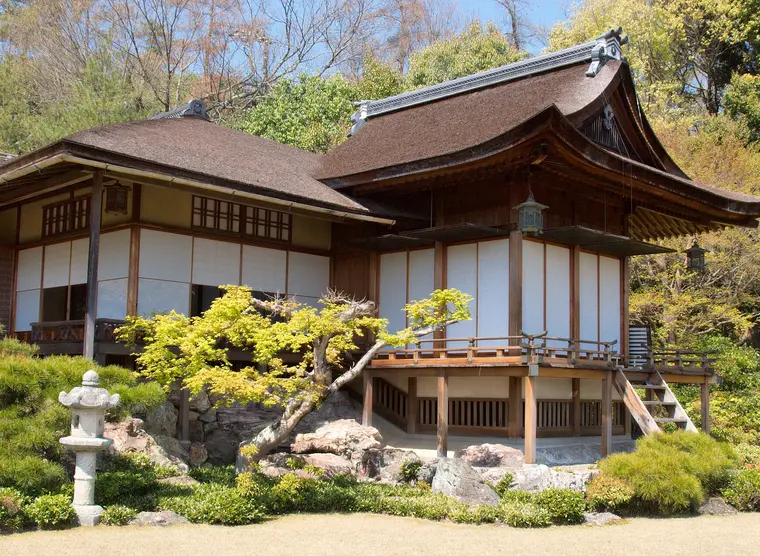
Although not a temple, Okochi Sanso Villa is one of Arashiyama's most remarkable cultural sites. The former estate of actor Okochi Denjiro occupies a hillside overlooking Kyoto and features beautifully maintained gardens that blend traditional landscaping with stunning mountain views.
The villa provides a tranquil retreat away from the district's busiest areas and is often overlooked despite offering some of the finest scenery in Arashiyama.
Kimono Forest: Modern Art Meets Traditional Kyoto
Near Arashiyama Station stands one of the district's most unique attractions: Kimono Forest.
Created by designer Yasumichi Morita, this public art installation consists of more than 600 illuminated pillars wrapped in vibrant textile patterns inspired by Kyoto's traditional kimono designs. During the day, visitors can admire the intricate colors and patterns, while at night the pillars become beautifully illuminated, creating a striking contrast with the surrounding historic district.
At the center of the installation lies the Dragon Pond, where visitors are encouraged to touch the water and make a wish. The combination of traditional craftsmanship and contemporary design has made Kimono Forest one of Arashiyama's most distinctive modern landmarks.

Kimono Forest, Arashiyama
@Basile Morin on Wikimedia, CC BY-SA 4.0
Rent a Kimono in Kyoto!
Explore this traditional city while wearing traditional garb! Rent a kimono from one of Kyoto's most reputable establishments. For summer, cotton yukatas are also available!

Kimono
PxHere, CC0 Public Domain
A Destination for Every Season
One of Arashiyama's greatest strengths is its year-round appeal.
Spring brings cherry blossoms along the riverbanks and around Togetsukyo Bridge. Summer covers the mountains in vibrant greenery and offers opportunities for riverside dining. Autumn transforms the district into one of Kyoto's premier destinations for viewing colorful maple leaves. Winter provides a quieter atmosphere, with occasional snowfall creating particularly picturesque scenes around temples and bamboo groves.
Each season reveals a different side of Arashiyama, ensuring that no two visits are ever quite the same.
Discovering the Timeless Beauty of Arashiyama
Arashiyama is much more than Kyoto's famous bamboo forest. It is a district where centuries of history, spirituality, art, and natural beauty come together in a uniquely Kyoto setting. From the iconic paths of the Bamboo Grove and the Zen gardens of Tenryuji Temple to the moss-covered tranquility of Gioji Temple and the colorful modern artistry of Kimono Forest, Arashiyama offers experiences that capture both the traditional and contemporary spirit of Japan.
Whether visiting for a few hours or spending an entire day exploring its temples, gardens, and riverside landscapes, Arashiyama remains one of Kyoto's most rewarding destinations and a place that continues to inspire visitors from around the world.
Check out our favorite activities in Kyoto!


Create the trip of your dreams with our experts!
Whether guided or independent, our itineraries adapt to your travel style. Let our agency and local experts handle the logistics of your trip to Japan for an unforgettable and stress-free experience.


