
The 7 Best Zen Temples to Visit in Kyoto
- Published on : 04/06/2026
- by : Clement
- Youtube

Kyoto Tenryu-ji
@blondinrikard on Flickr, CC BY 2.0
Kyoto, the former imperial capital, is the city to visit when it comes to ancient temples; it is said to be home to over 1,600 Buddhist buildings. Among these are the temples of Zen Buddhism, one of Japan's most important religious movements and probably the best known outside its borders. Discover Kyoto's best Zen temples with Japan Experience.
The zen Buddhism was introduced to Japan from China in the late 12th century. This Buddhist movement, with its emphasis on meditation and personal experience, has left its mark on Japanese culture.
The famous dry gardens of sand and rock, the tea pavilions, miniature landscapes and pure architecture now associated with traditional Japan have their origins in the aesthetics of Zen Buddhism.
Zen has spread throughout the archipelago, Kyoto occupies a very special place in its history; many temples were built here, some of which are now among the most famous in the country.
The editors of Japan Experience have compiled a list of the 7 temples not to be missed on your next visit to Kyoto!

Kamakura Meigetsu-in
@annintofu on Flickr, CC BY-NC-ND 2.0
1. Kennin-ji
Founded in 1202 by the monk Eisai, Kennin-ji is Kyoto's oldest Zen temple. It is the main temple of the Rinzai school, one of the two branches of Zen Buddhism. Visitors can explore its ancient wooden buildings, contemplative gardens and painted ceiling, adorned with two dragons. Located near the Gion district, Kennin-ji offers a quiet interlude just a short stroll from one of Kyoto's busiest districts.
FURTHER INFORMATION
Address: 〒605-0811 Kyoto, Higashiyama Ward, Komatsucho, 584
Opening hours: 10:00 - 16:30
Admission fee: ¥800


2. Kôdai-ji
Also near the Gion district, in Higashiyama, stands Kôdai-ji, founded in the early 17th century in memory of Toyotomi Hideyoshi one of Japan'sgreat unifiers. Visitors can discover several buildings dating back to medieval times, as well as gardens designed by the famous landscape master Kobori Enshû. The temple is also renowned for its seasonal illuminations, held in spring and autumn.
Its adjoining bamboo grove is particularly popular. More intimate than the famous bamboo forest, more intimate than Arashiyama's famous bamboo forest, it offers a quiet stroll between secondary pavilions and ancient teahouses.
FURTHER INFORMATION
Address: 526 Shimokawaracho, Higashiyama Ward, Kyoto, 605-0825
Opening hours: 9:00 - 17:30
Entrance fee: ¥800
Discover Kyoto with Japan Experience tours!


3. The Ryôan-ji
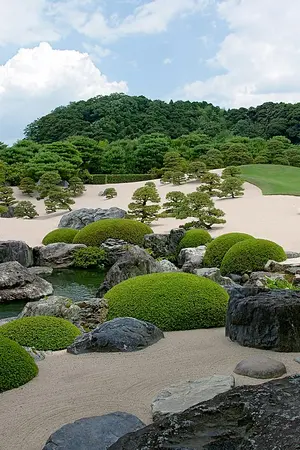
Founded in 1450, Ryôan-ji is now one of Japan's most famous Zen temples and a UNESCO World Heritage Site. Built into the side of a mountain, it features a vast pond, all surrounded by vegetation and inviting footpaths.
Ryôan-ji is best known for its Zen garden. Composed entirely of carefully raked white gravel and rocks arranged in small groups, it is considered one of the masterpieces of its kind.
Its exact meaning remains unknown, giving rise to numerous interpretations.
Some see islands floating on the ocean, others mountains. This deliberate composition perfectly illustrates the spirit of Zen, which favors personal reflection and invites each person to find his or her own reading of the landscape.
FURTHER INFORMATION
Address: 13 Ryoanji Goryonoshitacho, Ukyo Ward, Kyoto, 616-8001
Opening hours: 8:00 - 17:00
Entrance fee: ¥600

Ryôan-ji Zen Garden
@rc! on Flickr, CC BY-NC-ND 2.0
4. Tenryû-ji
Also listed by UNESCO, Tenryû-ji was founded in 1339 in memory of Emperor Go-Daigo. Located at the foot of the Arashiyama mountains, this temple occupies a special place in the history of Japanese Buddhism.
In fact, it was designated as the first of the "Five Great Temples of Kyoto"(Kyoto Gozan), a network of Zen monasteries created by the shogun (warlord) during medieval times. Visitors come to enjoy its landscaped garden, featuring a central pond surrounded by rocks, pines and bushes.
FURTHER INFORMATION
Address: 〒616-8385 Kyoto, Ukyo Ward, Sagatenryuji Susukinobabacho, 68
Opening hours: 8:30 am - 5:00 pm
Entrance fee: ¥500

Tenryu-ji
@annintofu on Flickr, CC BY-NC-ND 2.0
5. Nanzen-ji
Nanzen-ji is a vast Buddhist complex founded in 129, at the foot of the Higashiyama mountains. Located near the Philosopher's Path, it comprises numerous subtemples and gardens. Its immense Sanmon Gate is one of the most impressive in Kyoto.
In addition to its Zen gardens and meditation halls, the temple is famous for its red-brick aqueduct dating from the Meiji period, a remnant of Lake Biwa that supplied water to Kyoto.
This astonishing structure, which brings Western architecture into a traditional Japanese environment, creates a unique contrast within the complex.
FURTHER INFORMATION
Address: 86 Nanzenji Fukuchicho, Sakyo Ward, Kyoto, 606-8435
Opening hours: 8:40 am - 4:30 pm
Entrance fee: ¥600

Sanmon door
@森井ゴンザレス on Flickr, CC BY-NC-ND 2.0

Nanzen-ji aqueduct
@Patrick Vierthaler on Flickr, CC BY-NC 2.0
Discover our activities in Kyoto!


6. Daitoku-ji
Located north of Kyoto near the Golden Pavilion, Daitoku-ji is distinguished by the extent of its domain, which comprises over twenty subtemples scattered throughout a monastic complex. It is notably associated with the tea master Sen no Rikyû, making the temple one of the most important places in the history of the tea ceremony.
It's possible to practice zazen inside Daitoku-ji. A fundamental Zen Buddhist practice, zazen literally means "seated meditation" and consists of sitting in an upright posture, concentrating on breathing and the present moment.
Count ¥1,500 for a one-hour session (¥3,500 with an optional vegetarian meal). A reservation is required.
FURTHER INFORMATION
Address: 53 Murasakino Daitokujicho, Kita Ward, Kyoto, 603-8231
Opening hours: 9:00 - 17:00
Entrance fee: ¥500 (additional fees for certain secondary temples)

Zazen meditation
@PeterThoeny on Flickr, CC BY-NC-SA 2.0
7. Tôfuku-ji
Founded in 1236 by the powerful Fujiwara clan, Tôfuku-ji was designed to rival the great temples of Nara.
The temple is known for its vast grounds, including its grand gate and numerous secondary pavilions.
Tōfuku-ji is also known for its autumn landscapes. Every year, visitors come to admire the reddening maples, creating one of Kyoto's best-known panoramas during the momiji season.
FURTHER INFORMATION
Address: 15 Chome-778 Honmachi, Higashiyama Ward, Kyoto, 605-0981
Opening hours: 9:00 - 16:00
Entrance fee: ¥500

Tôfuku-ji
@annintofu on Flickr, CC BY-NC 2.0
Want to learn more about Japan? Be sure to subscribe to our newsletter and follow us on Instagram!
Create the trip of your dreams with our experts!
Whether guided or independent, our itineraries adapt to your travel style. Let our agency and local experts handle the logistics of your trip to Japan for an unforgettable and stress-free experience.


